Showing posts with label French. Show all posts

Thursday, November 12, 2015

Same Old, Same Good

Next up - the duo introduced well by this post (and now you get a digression into the backstory of that link. There used to be a wonderful website called austenblog that kept up to date on all the latest Austen news (of which there is plenty, believe me :))  So the Editrix, Margaret Sullivan, apparently got bored of this site and stopped doing regular updates, so I stopped reading it.  Recently, Sarah Sp sent me a link to an exhibit about Emma showing in Goucher College, posted on the habitofjournaling blog, which she explained was the new blog by the Editrix.  So I took a look at it, and that post was the second post, which of course reminded me that I had to do this review. So, months late as usual...)

At some point, I needed something new to read and of course went back to my Heyer collection.  I
picked up Devil's Cub, which I reviewed at some point previously (when I was on maternity leave with BB).  This is one of the Heyers that has gone up and down in my estimation, I don't even remember why.  Probably related to Vidal's status as a Duke, its placement in the Georgian, rather than Regency era, and the Sp's pointing out that Vidal was actually going to rape Mary.  Any on this reading, I found the book absolutely spectacular.  Greatly romantic of course, but also sporting a wonderful heroine, really the stuff that heroines are made of with her spunk, coolness, intrepidity, resourcefulness, quiet pride etc.  But also a fun plot (pretty fast-moving, as this is a shortish book).  Just really, really enjoyed it.

So of course, next on my list had to be These Old Shades - Justin's awesomeness in Devil's Cub of course inspiring me to pick up his own story.  And Justin is awesome  - the post does a great job of describing that - "I do so love the Duke of Avon.  He's so fabulous" - that he is :) This book, similarly to Devil's Cub, starts off with the stilted writing of Heyer's non-Regency (and I guess, mostly if not all, earlier) books.  But unlike Devil's Cub, which I think shrugged off the tone pretty early (or I stopped noticing, but pretty sure it's the former), this one kind of kept it throughout.  A little too much drama, a little too much Mary Sue, a little too much "show, don't tell".  So I have to say, I didn't *love* this one.  I mean, liked it, sure, but it's not one of my favorite Heyers. I'm not sure it ever was though, so that's ok.  She's still da best :)


Verdict 5/5, 4.5/5

Tuesday, August 6, 2013

Regency, Done Literarally

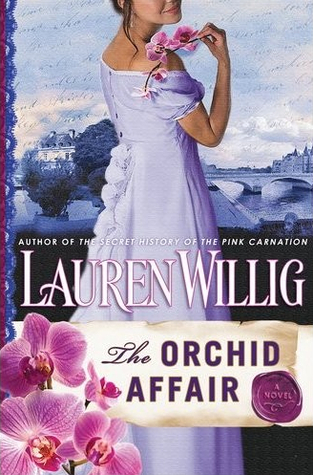
Who would have thought I would have a another opportunity so quickly? But, a succession of circumstances... Ok, you really want to know? I know you want to :) (or I want to make my review longer :)) Phone did not have a long time to charge today as I got in late because drove straight from cl and went to pump, and then ate lunch about an hour after I finished pumping, at which point I took my phone out to get lunch (like I always do) and forgot to plug it in.  As I went up to lunch, I noticed my throat hurting and decided to go get a strep test.  I went to the doctor’s office, which took quite a while, and of course my phone was not plugged in this whole time.  Turns out I have strep so I went home early... and my phone was dead.   It is now charging but does not have enough juice to do anything with (and by anything I mean read Slate because it *really* doesn’t have enough juice for tethering.  So I need something to do while I take the local train back home.  And what to do without internet? Writing a blog entry sounds perfect :)  So! Next up... After I finished Grandma’s two presents, I didn’t go back to ebooks... not sure why, but maybe it was because I was almost going back to work? or was already so behind in my reviews that I didn’t want to bog myself down further? Whatever the reason, I wasn’t reading much, and when I did read it was books I had on my shelf already (oh right, probably the reason was I was watching t.v. except on Shabbos so I just needed something to read on Shabbos).  Really don’t know the order, and besides, I want to review some in groups, so next up is the two Pink Carnation (Lauren Willig) books I own.  These aren’t my favorite two, they are just the ones I happened to buy (#4, Crimson Rose because the library was taking forever to get it and #8, The Orchid Affair because I went to the book signing (yes I did :)).  I actually reviewed #8 at the time I read it, but of course I can’t link to it right now because I’m writing offline, but you can go find it yourself :)


Anyway, you hear a lot about Lauren Willig if you read this blog, since she’s always offering up suggestions for authors (though I guess I don’t take her up on too many of them but I do feel like I mention her a lot).  Her books have a strong element of Regency romance, which is why I read them, but they are also very well written and well researched, entertaining historical mysteries.  Not found in the paperback section of the library or anything :) I always liked them, and still do, but I’ve noticed the “seams” showing a bit more in the past few years - by which I mean that her narration sounds like it’s often chuckling to itself.  This is less a product of the books changing than of me getting more discerning (if I do say so myself :) could it be related to this blog?? :)), which I know because I see the same writing style in #4, which came out before I noticed the trend.  So her writing, while good, is a bit too blithely irreverent for me, but not at all awkward and still vivid and entertaining.  The books are solid romances, each with a fresh plot and the spy element is never too distracting.  The modern element of the books has gotten less interesting as the story evolves (no surprise there as how long could the original romance be stretched out) but 1) it doesn’t take up too much time and 2) the new plot twists at least keep us from rehashing the same old conflicts.  Basically, these are good, solid books, rare well-written examples of (my favorite) Regency genre (ok not technically Regency but close enough).


About these two specifically - like I said, they were never my favorite ones.  Crimson Rose is about Mary Alsworthy, and while she is a sympathetic character in this one, she can’t entirely lose the taint of being a conniving and nasty sister in the previous book.  I do heart Lord Vaughn :) but the romance showcases that issue where the cool guy is so cool you don’t want to see him humbled by romance.  As for The Orchid Affair, it’s about a governess and a French bureaucrat... not exactly my ideal milieu.  But the romance are both excellent of course and the stories well told.  So I didn’t find it hard to read these, not at all.  If I had more Lauren Willigs at home, I’d reread them too :) And whenever I start going to the library again the two (!) new Lauren Willigs (one not a Pink Carnation) will be first on the list.

Verdict: 4.5/5

Wednesday, July 4, 2012

All the Adventure, As Promised


Oy veis mir.  Two behind and it's not even June anymore.  That's what comes of not writing these on the bus... but what's the point of lamentation? Let's get on with it.  Luckily, though I finished this like what 3 weeks ago, it's still relatively fresh in my mind... since this was like the 10th time (or something like that) I read it.  After the success of The Blue Castle, and before any of my new books came in at the library, I was eager to continue with the old favorites trend.  So I picked up a certified goodie, The Scarlet Pimpernel.  I'm obviously not alone in my enjoyment of this one - this book is a classic, and it's not because of any great literary value.  It really is the quintessential adventure.

I first valued TSP as a romance, because that's what I value everything as.  And of course, Sir Percy's hidden passion for Marguerite is very romantic.  But what makes this book stand out as a romance is the same thing that makes it stand out in general - the very awesome Scarlet Pimpernel.  I mean, I guess he's not the man nearest and dearest to everyone's heart, but handsome, brave, smart as a whip, quick, gallant (and of course rich ;))... yes, he's pretty much all that.  So who wouldn't want to read a romance starring him and a woman who is impressive enough in her own right?   And romance is very satisfying, as far as it goes.  But the truth is, it's not given *much* attention during the course of the book.

It's much more about the story, as it should be.  I've read this book a lot, I know the drill, and yet I still find it to be a page turner.  It's well-paced, with things moving along, and no gratuitous action scenes thrown in.  We get closer and closer to the mysterious identity of the SP, and then, when we find it, we are treated to a brilliant display of the abilities that have kept him bringing people to safety by the skin of his teeth time and time again.  I remember one time I felt compelled to actually clap at the conclusion of one his triumphs.  This time I didn't go so far, but trust me, I was impressed.  I don't know that there's much funner reading than Sir Percy's pitting of his wits against his enemies'.

To be sure, the book is guilty in some measure (no little one I might even say) of aggrandizing the situation for dramatic tone.   Every moment is milked for all its worth, every dilemma is agonizing, all the emotions are exquisite.  Not to mention the slightly strange emphasis at times on Marguerite's girlishness and how attractive it seems to make her (sorry not really the same thing, but it all comes down to that old "show, don't tell")  And I was even more aggravate than usual from having made the mistake of reading the forward and hearing how Baroness Orczy apparently felt "the beautiful Lady Blakeney" to be her alternate ego, her better self - don't read forwards, especially not if you plan on writing your own review.  BUT... this is one book that can get away with pretty much whatever it wants.  It really does live up to the promise of all that drama, manufactured or not.  So with all the angst and all the throes of passion, it keeps on zipping along towards its extremely satisfying conclusion.  There's a reason so many people love this book.

Verdict: 5/5

Monday, January 31, 2011

0 To 60, Maybe a Bit Slower Than Usual

So if you noticed last post, I most carefully did not mention what exactly my exciting next-on-list title was. That was because I did not want to ruin the full effect of the following story:

As many of you know, (and I know there are *so* many of you :)) one of my favorite authors is Lauren Willig (and as previously mentioned, definitely my most followed one).  Last Thursday, she was in Manhattan doing a reading for the brand-new Pink Carnation tale, The Orchid Affair.  Having never attempted to attend any sort of this kind of event, it nevertheless entered my mind to go.  I mean why not, I'm in Manhattan anyway, it was starting at 7:00... But I felt kind of weird about it, naturally, so I put the question to my trusted advisors, the gg... and they pretty much all said, go for it! So I did.  It wasn't spectacular or anything, but I'm glad I went, it was fun to hear the author's take on the book.

Her take was that this book was different for two reasons: 1) The characters were more bourgeois than aristocratic and 2) The male lead was French... and a French revolutionary at that!  #1 was an obvious minus, as you know me and my snobby tendencies :) But at least it wasn't a noble marrying beneath him/her... a'la The Scarlet Pimpernel :) (not really, I don't really mind it in Sir Percy and Marguerite).  And they weren't low class, just not noble... actually Laura is artsy, kind of like Marguerite, and Andre is pretty bourgeois, but raised to a fairly high position by the revolution.  So in the end, it wasn't too much of a minus at all.  As for #2... well yes, I'm a total Anglophile, but I usually dive wholeheartedly into whatever I'm reading at the moment, so switching perspectives really isn't too much of a hardship for me.  So you wouldn't think I'd mind #2 at all.  Besides, given that this is Lauren Willig, I knew he wouldn't really be all a'la lantern les aristos (wow, I just looked that up, I actually got it right! go me :)) and he wasn't... so far from it actually, I thought it might have been a little more believable and still very doable if he had been a bit more in between... but enough said, don't want to spoil the surprise for you :)

Anyway, the truth is, neither of those two differences made much impact on my enjoyment of the book in themselves... but they did contribute to what I felt made this book very different than previous ones - a much more plot-driven, spy-centric storyline.  I mean, there's always some mystery/danger/drama somewhere in these books, but it's often (sometimes more often than others) almost the backdrop to the characters' developing relationship and/or the social scene of the time/place.  And since you know I'm not reading these books for the thrill (at least the thrill of a noble life on the edge), I'm perfectly happy with that balance.  This book, with the far more immediately dangerous setting than Regency London or far-way British India of early Napoleonic France, had a whole lot more of the spy stuff, and not really quite enough of the good stuff... These were characters with a job to do, and they spent most of the book doing it.  Yes, there was early admiration on both sides, but it really wasn't anything they paid any attention to, or anything we paid much attention to either for that matter.

I mean, it's not like I wasn't enjoying it... it's Lauren Willig after all, I would like her books simply because I like her books (familiarity breeds fondness? :)) And there was a brewing romance, if a subtle one... and the history was interesting as always, the writing as usual light, funny, and very well constructed.  But you know, I wasn't *loving* it (as is evidenced by the fact that it took me an entire week to get through (though I did read it every night, I just fell asleep reading it every night)).  Anyway, that was until about half way through... and I can literally mark the moment when the pace picked up... actually, it was when Andre's true allegiances are revealed so perhaps I am wrong in saying they were too extreme.  Realistic they may not have been, but fun they were.  (Except that the nuanced view of the world opened up by taking the other side's point of view for once is entirely lost, as Andre turns out to be not really on the other side at all... but perhaps I have said too much once again, I shall desist :)) Anyway, the point is, half way through, the book got good.  The romance picked up, most definitely, as the characters interacted more - and we had the treat of them playing a fake family, always a great opportunity for... out of the ordinary situations.  And the spy part picked up too, in its own way - though it does recede for i'd say the third and fourth fifths of the books.  But that was good - not too much tension, as as soon as things got really scary, we stopped spending so much time on them, and starting spending more time on things we cared a little more about :) And then of course at the end, it went back to the spy stuff for a final finish, but that's typical and totally expected, acceptable, and even necessary.  So all in all, entirely satisfactory.  Maybe not the absolute best, but I think I would say one of her smartest books.  And in case you were wondering, Colin and Eloise's story continues to amuse, even if it is not as necessary as it once was, now that there an old fuddy duddy couple :)

Verdict: 5/5

Friday, June 25, 2010

Disturbing Themes Clad in the Smoothest of Silky Tones

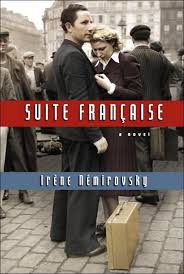
I actually almost finished Suite Francaise on Sunday (long car rides can be useful :)) but then I abandoned it to other occupations so I just finished it today.  The second part of the book was quite different from the first.  I felt like the first was just trying to portray what the invasion of Paris and surrender of the French felt like, without trying to make much of a point besides (other than that there are a lot of disgusting people in the world).  The second was different.  First of all, it concentrated on many fewer characters.  It's about the occupation of a French village by German soldiers, and there are a few different villagers profiled, but it's mainly the story of one French upper middle class woman and the German officer who is billeted by her.  In the end, there's not really much of a story there either, but theme of the relationship is also, I think, the main point of the part of the book.  And it is NOT one I agree with.

Well the idea of a relationship between one of the occupied and one of the occupiers pretty much says it all - and in this way it is a continuation of the first part - people are all the same.  But here, instead of people are all bad, the point is the Germans aren't so bad.  They are polite and genteel, and they love and hope and all that just like everyone else.  To which I say, you're right, the Germans *are* just like the French.  But all that means is that the French are evil too.  I know that's a strong word... and I don't really believe that all people are evil... but the fact is, the reasons the French never did what the Germans did has nothing to do with innate good nature and everything to do with laziness, incompetence, and lack of motivation.  Of course, as in every nation, there are good people and bad people, but on the whole, the French do not show in a good light when it  comes to anti-Semitism.  I suppose this brings up the question of the doer vs. the observer, and if they are equally cupable.  My personal answer to this one is no, but that doesn't mean the observer isn't culpable at all.

I suppose I'm getting a little off topic... but that's what happens when I read books about the Nazis that go out of their way to portray them sympathetically - and she does a good job too - for a second, I actually felt bad at the end of the book when the Germans headed out to die in Russia - but then she kept going on about it and whatever twinge I felt was lost in a yeah, we get - b"h these people died by the millions in the unforgiving Russian winter because that's what really defeated Germany in the end.

But Irene Nemirovsky never lived to see that - and that's really what's amazing about this book - she wrote it as it was happening.  When she wrote of the people speaking of the war's end, it's not like she was looking back years later and knowing that in a few years it would be over and life would be, if not the same, at least better.  She really did not know who would win the war and how long it would last.  She wrote as it was happening.  It's strange to think of, especially when it mentions how the French feel about being defeated by the Germans... of course, the French were defeated by the Germans, but in the end, the US and England managed to reverse that... and the French memory is short enough that all they remember is de Gaul and the partisans (well maybe that's not true... but I certainly had forgotten that French was really not an Ally for most of the war because they were an occupied power).

And again I'm off track!  Well I guess that's the strength of this book - it definitely a make-you-thinker - especially when I know I'm going to be posting about it :)  Even if I don't think she's the greatest studier of human nature or makes particularly realistic characters, she does such a good job it feels like they are anyway.  And since I've never been a stickler for realism, feeling is what matters.

So what's the verdict? well for the writing, both books get 5/5, easy (really a 6/5).  For historical interest, I'd say 4/5 for the first book, maybe 3/5 for the second (in that case it's not really the history that's interesting so much as the country itself).  But as for the story? Well the first has no story at all and the second has one I'm 1) uninterested in and 2) put off by.  But the story isn't what anyone would read this for... so I'm willing to be kind and disregard the total lack of one.  But I cannot disregard my complete disagreement with Ms. Nemirovsky (I like that, don't you? :)) about the essential humanity of German soldiers.  That being said, I'll give the first one a qualified 4/5 (qualified by the fact that this book is no  fun whatsoever to read and there is absolutely no story but that's just not why you'd read it) and the second... 2/5 - just for the writing though.

Food gets complicated too - for the first part, I had been thinking of sushi - it's a little more sophisticated than my usual fare (don't laugh, I'm a huge fan of sugar free jello and diet sunkist :)) and people love it... but the truth is, I really don't get what's so great about it.  I mean it's *fine* but it is just *not*  a treat to me.  On the other hand, it's pretty low fat :) (not for me though, b/c of the rice) but it makes you feel fresh and healthy as opposed to totally glutted.  Actually I think that's a great food for the first book - you read it for the crisp and refreshing writing, for the sense of history - but you do NOT read it for the thrills, or the chills, or the lump in the your throat, or the little thump your heart gives :)

But the second... well I don't think it even has the virtues of sushi... it was interesting, but in the end it was just wrong - leaves you feeling like what's the point? so for that... I need a food that is not typical, something you might want to try, but something that in the end just leaves you with a bad taste in your mouth... hard to think of something b/c i'm so hungry right now i think a/t would be good - maybe brussel sprouts though, I do *not* like those (or I didn't like them the one time I tried them anyway) - and if I recall, not a pleasant aftertaste... not entirely satisfied with that, but I guess it'll have to do :)

Was that long enough to sate your hunger from the almost week long drought? :)

(btw, the picture is of Irene Nemirovsky b/c I already have one of the book)

Saturday, June 19, 2010

A Glorious Portrayal of a Rather Unglorious Moment

I'm halfway through Suite Francaise, but given that it's long (well longer than my usual recent fare at least) and the book is really two totally separate stories, I figured it's okay for me to post a halfway through review - so here it is :))

Suite Francaise has been strongly recommended to me by the highest sources (that would be the Sp's :)) so I naturally had to read it, though it took me I think 3 times getting it out from the library to actually get into it.  Since it's a book about wartime France, I wasn't expecting a barrel of laughs at all - I know the chief attraction here is the writing, and it is well written.  But come on, there are plenty of well written books - I mean, Tolstoy anyone? so I assumed this book had something more to recommend it.

But halfway through, I'm not sure what that is.  It's an *extremely* powerfully written portrayal of the war in France (the first part, Storm in June, is about the fall of France to the Germans and the public's flight from Paris) but do I need to read more war books? Especially when they are written by a self hating Jew about a group of people who did not do more than they should have either to resist the Germans or to save their country's Jews.  I asked Batya what the attraction was and she said it was interesting - well it is that.  I always say that travel is my favorite genre... but still, war books! and a war book with no real story, whose purpose is really just to give the reader an idea of the panic of the time.  It does do that - I started reading it on the bus on the way from NY and there was traffic and I totally felt for all those people in a standstill in packed cars on the road from Paris.

And the characters! Never mind unsympathetic, these characters are mostly deliberately cruel or disgusting - I think that's part of the point of the book, showcasing how war brings out the worst in people, but with all that, they are still people (still French people too :)) Well yay for them - but when I know what was going on elsewhere in Europe at the time, forgive me if I have less than zero interest. And anyway, I don't know if French people are that despicable, but I know the people I know aren't that bad.

So it was powerful, but I just don't know why I'd particularly want to read it - other than to bring the average tone of my reading material up significantly :)

Will report back to you with a review of the second half and verdict whenever I finish