Showing posts with label classics. Show all posts

Friday, May 13, 2016

Powerful and Kind of Depressing - Yup, It's a Classic

It's already been a while since Pesach and I gots me some new books to dig into, some high time I review my Pesach reading.  Actually wasn't too much of it - trying to remember what I did the last days, but I think it was just picking up random Gordon Kormans at the 'rents.  First days, I finished the book I started the week before Pesach at the in laws (yes we were there two weeks in a row, actually have been at either parents or in laws 5 straights weeks :)) and started another one, which I haven't finished yet because I left it there and just got it back. SO... Pesach reading material consists of Slaughterhouse 5, by Kurt Vonnegut.  Impressive, you say, stroking your chin.  Yes - the Gertler house in Teaneck contains many books, many of which (I think it's the fiction ones) are now arrayed in beautiful order on the new built-in bookshelves in the basement.  And most of those fiction books are either children's fantasy (Shoshana, Rami ones presumes) or (the majority) classics, many of the intellectual bookshelves of Grandpa's East Brunswick library.  Anyway, Slaughterhouse 5 is a short and famous read, so I decided to be intellectual and read it.

Obviously, expectations here were not to thoroughly enjoy this book in the vein of a Georgette Heyer or Jane Austen.  So what were the expectations (must always set the stage)? Definitely, writing would be good.  Likely, message would be powerful. Possibly, message one I agree with.  How did the book line up? Well, not that I'm any judged, and of course I'm predisposed in favor, but writing was exactly what I expected. Crisp, clean, vivid - good in a very modernist way.  Story was bizarre (it was supposed to be), which possibly was meant to add to the power of the message. I think it did - certainly it's engaging, strangely when given the detachment of the style and the lack of attractiveness on the part of Billy Pilgrim (protagonist).

Message I agree with? Well the message was that the bombing of Dresden was horrible.  Can't disagree there.  More largely, that war is horrible. Can't disagree there either. And I think it is important to remember the horror of it, and not think only in terms of abstract numbers.  I can't say I do know much about the exact horrors of war (whether fire-bombing in Dresden or mustard gas in WWI (saw a picture of a victim on Quora yesterday)), and it is valuable to know.  Not that I make decisions about people going to war or not, and not that I'll ever be in a position to :)

But of course, there's the other side.  War is horrible, but avoiding war can be horrible too.  The argument in Slaughterhouse 5 is that Dresden was unnecessary, a miscommunication, strategically meaningless and thus unjustified.  And while it certainly is possible for something like Dresden to happen unnecessarily in the fog of war, and it's important to avoid that, the truth is, Dresden wasn't that simple.  At least according to the Wikipedia article on it :), many of made the case for its strategic necessity. And further, while Slaughterhouse 5 claims the number of dead to exceed the deaths of Hiroshima and Nagasaki, in fact, the number was far lower, somewhere in the lower 10s of thousands.  Not that that's really any better, but the point is, if Vonnegut gets it wrong there, then I don't put much faith in his analysis of the strategic advantages of Dresden.

Vonnegut was (apparently) writing from personal experience of the horror, and the book absolutely is able to viscerally portray the monstrousness of the bombing and of the horrors of war.  But I assume this book is meant to be something more because 1) the bizarre plot of time travel and aliens would not seem to be necessary just to get across that message and 2) this book is considered a great work, so probably has more to offer?  The message of the alien / time travel stuff is, I guess, that nothing matters in the long run, or that all of our fights, no matter the scale, are petty and meaningless? This is more my speculation, and I don't exactly have a PhD in this stuff, but let's discuss it for what it's worth. I of course don't agree that nothing matters at all just because it doesn't matter in the long run - we are here for a purpose. But it is true that we don't see the full picture and life would look very different if we did. Hey - if that's the point of this book, totally up my ally :) But I think the book sees different = meaningless and I see different = perfect. So not quite the same. Anyway, like I said, it's all speculation.

Bottom line, what this book gave me was a powerful perspective on the bombing of Dresden in particular and the horror of war in general. That doesn't make wars not worth fighting - on the contrary, remembering it and fighting the right wars is what keeps us human (how poetic).  As far as any other deep meaning, I'll go read the wikipedia or cliff notes of the book now so I can actually get it :)

Verdict: 4/5 (only that high b/c it was good writing and short, do not take this as an endorsement)

Update: Oh it's about free will. A worthy conundrum.

Sunday, April 17, 2016

Better than Fiction

And for a something a little different - during some Shabbos at my in-laws' in Jan/Feb (forgot when), I neglected to bring reading material from my house, and had to make do with what was there.  They recently reorganized their books, so there was lots of new scope, and, to my delight, I came across Cheaper by the Dozen. I'm not sure when the last time I read this book was, but I don't think it'll be long before I read it again :) (must order a copy).   History of this book goes back a while, and it's fun to go down memory lane.  One day in CL, Peryl started telling me about a really funny book she had read about a family with a dozen kids.  The specific story she told me was, if I recall correctly, the story of the Peeping Tom and Ernestine, and I was very intrigued.  I got the book out of the Peckville Library (the old Interboro Library) and loved it.  Read it many, many times since then (I was certainly in elementary school when I first read it, though I'm not sure what age), and read Belles on Their Toes as well (that one used to be harder to find, I remember being excited when I picked it up in Towson).  Rereading it now, it's funny how many of the references I understand that flew over my head.  Some innuendo, but some more intellectual ones.  I'm sure I understood them in later readings, but I've forgotten those and the earlier ones stick in my head.  Anyway back up memory lane...

This book is great! It is, literally, laugh-out-loud funny.  The writing is neat, quick, fresh, and amusing - every phrase is well turned.  And while it's strange to speak of characterization in a non-fiction book, the characterization of bother Mother and Dad (forgetting what they call him at the moment) Gilbreth is fantastic.  I picked the book up expecting to just read a little, and then kept on reading most of Shabbos. Finished it this past Shabbos on Friday night.  There are so many moments in there that I feel like have stuck in my consciousness without me even realizing where they are from. And quotes that make me smile every time I hear. It's classic.

It's also kind of fun reading about NJ now that I am a resident of this fine state :)  Montclair, of course (I looked up Eagle Rock Way on google maps, it's still there), but even New Brunswick was mentioned once or twice.  Also interesting to look up the Gilbreths on Wikipedia and follow them for a bit - not much info there, but the last one (Fred I think) just passed away a few months ago as it turns out.

Anyway, I thoroughly, thoroughly enjoyed this book and will definitely be handing it over to my kiddos when they are old enough to start appreciating it (maybe 5-6 years, that's all, iyH :)) So glad I picked this one up again, and I'm sure I'll follow it up with Belles on their Toes at some point.

Verdict: 5/5

(p.s. the pic is the original version that I read)

Sunday, February 7, 2016

Different Medium, Same Great Story

Another one of my home library collection (of course), but with a twist - this one comes with a play review! (Aren't you lucky? :)) So some months ago, I saw advertisements by the train station for the off-Broadway show... Daddy Long Legs. Now if you think I was going to miss seeing that, I don't know why you're reading this blog. I've watched the Fred Astaire movie more than once and that one doesn't come *close* to being an accurate depiction of this beloved book.  I've looked for the silent version with Mary Pickford but wasn't able to find it (I should look again, that was a while ago).  And I've read the hard-to-find, not as good, sequel as well. So yeah, this is a book I go the extra mile for :) And I read the NY Times review, which was quite positive (the complaint was the story doesn't translate well for the modern ear, but since my ear is very old-fashioned, that's not a problem :)) So anyway, I knew I had to see it. Couldn't generate much interest from my cl girls, so I went with Dov's family, who are always up for a show. Well they all enjoyed it, and I LOVED it. I was grinning from ear to ear the whole time. Like, really. I know the book really well and the script followed it quite accurately (left out parts, but most of the lines were close to verbatim, and the plot followed basically exactly I think). So it was one of my favorite books, brought to life in a very-well done way, and on top of that... POV! POV! POV! While the letters are all written by Jerusha (of course), here we see Jervie's reaction... and his gradual fall in love with the writer.  And it's sooo well done. There's an aspect of guilt Jervis felt that I didn't really think of when I read the book, but it's quite plausible.  And his wry reading of the letters (mostly verbatim from the book) adds to the humor and whimsy of the writing.  The growing romance was nicely emphasized. And the finale gloriously angsty and satisfying in the end.

So of course I had to reread the book... and here I ran into the same problems as my last read - overfamiliarity + spoiled by explicit romance. The play followed the book so closely that I felt like I had just read the book, so lots of the great lines and romance didn't hold enough surprise for me. And though I am usual satisfied with imagining Jervis's POV as he reads the letters, having just seen it laid out in front of me made me miss it. So while I loved the book as always, I can't say I enjoyed it the more for having just watched it (this is in contrast to say, Persuasion, where watching the movie just made me appreciate the book all the more. I'd say this is a testament to how excellently done the play was).

To top it off, Huvi wanted to see the play too... so I went back again. I was certainly concerned I wouldn't enjoy it as much the second time around, and it did take me longer to get into it... but amazingly enough, I loved it the second time around  as well, at least by the end.

Daddy Long Legs is an incredible book and the play did an incredible job translating it.  Bravo all around, and I can't wait till the play has receded a little in my mind so that I can reread the book again :)

Verdict: 5/5

Wednesday, October 14, 2015

One Hit Wonder + Another

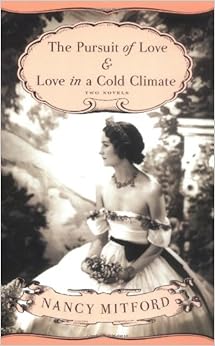
Well, well, well behind as usual and it's too bad because I bet I could have written a much better review two months ago... oh well.  So the story of this next story - after I finished Persuasion (or was it Sanditon? can't remember which was first), I needed something new to read... but I was not at home with my usual treasure trove of beloved favorites.  I was away for a three week vacation :) I contemplated going to the library in CL, but it didn't work out.  Then, the last week of my vacation I went with Dov's family to the Finger Lakes, where it was essential that I have something to read.  And I had the brilliant idea of making an activity out of it and going to a used book store! What could be better? Really I went to get kids books, I can't remember if that was more my primary motivation.  I went the first day but it was closed (Monday), so I went back again the next day (such persistence). I did ok with kids books, really nothing special (might as well just buy new on Amazon, as  I just did), and then I spent some time browsing for something for me. Naomi was with me, which made it... not easy, but I trawled the shelves nonetheless.  I was really ready to give up, I couldn't find any favorites and didn't have the ability to watch Naomi and search for new books  - and then I happened to come upon Nancy Mitford's The Pursuit of Love and Love in a Cold Climate! What luck! I've been meaning to read Nancy Mitford since who knows when, and even more since I read and *loved* Stella Gibbons.  So I picked up the two-in-one for $5 and I was set for the week (and more).

Now for the reviews -
First things first, my expectations. I knew going in the Nancy Mitford didn't write fairy-tale happy endings (so not Cold Comfort Farm).  The books were more in the vein of a roman-a-clef or illustration of the age (the age being the time between the wars).  But they are high society tales, and classics, so I expected a well-written source of gentle entertainment.

The Pursuit of Love fit this description to a T I'd say. Very well written, very likable narrator (unexpectedly nice), sparkling vivacity and wit, and a grand illustration of London society.  Also full of clear indication that the Pursuit of Love will not end in blissful capture.  It was not a happy ending, but it fit with the tone / theme of the book so at least I expected nothing else (though really, it did seem like it could have gone another way in the end).  And I kept turning page after page to read more about the mad adventures of the Radletts and Co.  So quite the enjoyable read overall.

We next turn to Love in a Cold Climate... which was.. wow... something else.  Same likable narrator but much, much less likable main characters for a start.  And it just goes down in from there. I am actually quite shocked about the content of this book - child molestation, marital infidelity, plenty of homosexuality. And none of it is particularly frowned upon.  This was really a very strange book - I'm not sure how it was received when it was written, but to me it just seemed like a book about bad-natured people behaving badly. In the end they mostly find love (spoiler alert I guess), so maybe that was the point? But the grotesqueness of the plot just seems not to fit with the neat ending.  Maybe I'm putting this more strongly than it actually is, but believe me, this was not the book I was expected after The Pursuit of Love.  The first one seemed eminently familiar and the second, utterly foreign.

Verdict: 3.5/5 for tPoL and 2/5 for LiaCC

Friday, August 14, 2015

1.2 JAs

As you know, my reading material comes, for the most part, from my small and select personal library.  Many of the titles have already been reviewed, but that doesn't stop me from rereading :) I don't remember what impulse compelled me to pick up Sanditon again (for I think the third time since I've started this blog?), but I certainly have no regrets about the choice.  I don't think I need to do another full review, but here's a short one.  Sanditon is absolutely a tons-of-fun read.  Another Lady obviously can't measure up to Jane Austen, but I think she's as good as Georgette Heyer.  Wonderfully enjoyable read, though certainly much lighter than genuine Austen fare.

Which leads me to my next review...  reading JA-lite, and right afterwards a silly article about the perfect alternative setting for each Jane Austen book inspired me to pick up Persuasion, my least-recently-read "good" JA (I don't like Mansfield Park and S&S).  Persuasion is saddest in tone of all the Austens, as Anne Elliot does not feel that life holds any hope of happiness for her.  I have in the past been somewhat put off by this, but now it's built in to my expectation of the book, so it doesn't bother me much.  And while it may be mored subdued in tone, the ending, and my anticipation of it, are sublime.  It's also a short book, with no side plots to distract from the main, wonderful romance. And the romance itself, while perhaps slightly less classic than P&P's hate at first sight, has provided an archetype that has been enjoyed ever since.

Reading the book made me want to watch the movie, of course.  With Persuasion, there aren't many options, but I chose ITV's 2007 version (short and on youtube + Rupert Penry Jones!). And much though I enjoyed the book while I was reading it, watching the movie made me appreciate it all the more.  All the subtleties of the plot and characters were lost, even though the story was still there.  And though I love JA for the story, she wouldn't be one of the most beloved authors ever without all the other stuff of course.

I have to say, this is a short review... I'm not sure if I was less cognizant than usual while reading, or if I just thought the book was perfect... but in any case, here it is and here's the verdict:

5/5 (for both, though in different ways, and of course if I had to rank, then Persausion would have to outrank).

Wednesday, July 1, 2015

Romance, Heavily Marbled

As promised, the new and interesting reading :) This is the first time in while I'm reviewing something that's relatively fresh in my mind.  What is it? As you probably do not recall, Lauren Willig talks about her weekly reading on her website.  A few weeks ago, she mentioned have just discovered and absolutely loved Miss Pettigrew Lives for a Day, which I have (fortunately or unfortunately) already read and thoroughly enjoyed (at least I'm pretty sure I did, I watched the movie but I'm fairly positive I also read the book).  Anyway, she mentioned that she also read The Making of a Marchioness by Frances Hodgson Burnett the same week, but hadn't enjoyed it as much, perhaps in contrast to Miss Pettigrew.  So I knew right away it wasn't going to be extraordinary but the Amazon summary sounded right up my alley, so I also knew I was going to read it.

(side note - of course, I never got around to finishing this and it is no longer fresh in my mind, oh well)

So the premise of this book is an indigent but genteel woman (of the Victorian age of course) makes her living by performing odd jobs for various patrons.  One of them invites her to spend some time at her country estate, where she is entertaining her very eligible nephew (a Marquis of course), along with some potential brides.  From the title, we know that our own heroine, Emily, is to be the chosen one.  And what could be more fun than seeing the choosing play itself out? And, indeed, the summer estate party scene of courtship provides satisfying romantic developments.  The romance is, I think, fairly well done, though I found the characterization somewhat strange. Chiefly, Emily's good nature makes her quite loveable, and she is also very capable - but the author puts great emphasis on the simple-mindedness that accompanies that good nature, and seems to relish it.  This is quite a change from, really, most books I read, where even when a protaganist is not the brightest, they make up for it in street smarts or emotional intelligence or whatnot.  But it didn't particularly bother me, it was just a bit jarring.

So much for the first half or so of the book.  Then... they get married.  Which I would have assumed happened at the end of the book, as is typical of a historical romance.  But actually, this was more of a marriage of convenience, which is certainly fair game, so I guess not in and of itself too strange. What was rather strange was the turn the book took... involving the Marquis's current heir, who returns from India determined to thwart his cousin's plans for cutting him out of the succession.  And so begins a rather sinister plot twist, involving heathen Indian maid servants, strange foreign ways, and even... murder (well attempted murder).  As Emily struggles to acclimate to her new role (hence the title), she is threatened not by the dainty barbs of society, but by the more solid danger of people actually out to get her.  And where is her husband during all this? Off on a business trip (or maybe it was diplomatic, can't really remember).  How is that supposed to be a convenient marriage plot?

And then... just abruptly as first twist happened, Emily escapes from her would-be persecutors and holes herself up in London to await her husband's return.  She is no longer physically threatened, so we can go back to enjoying the romantic developments (limited though they may due to her husband's absence).  This is really the end of the book, it doesn't take all that long for her husband to return for a satsifying finale (quite dramatic in its own way).

So what to say about this book? It certainly had very uneven tone, and the characterization was strange. A large part of the book had more of Gothic/mystery tone than the light romance I was looking for.  But in the end of the day (and the beginning too :)) it had the classic historical romance I was looking for. So can't say I regret reading it (for free :))

Verdict: 3/5

Sunday, October 12, 2014

Subtleties Upon Repeat Reading

Well I've been neglecting my blog again... I think the last post I wrote, I mentioned I was on to something slightly more sophisticated than GH.. or maybe that was when I read North and South? Anyway, at some point, I decided I had had enough GH for a while and I started on Emma. I think the impetus may have come from Emma Approved, the web series modernized version of Emma (by the makers of the Lizzy Bennet Diaries, which I think might have inspired me to pick up P&P, IIRC. Parenthetically (as you can see :)), I liked Emma Approved much better than LBD).

Obviously I've read Emma before, but I don't know it nearly as well as P&P.  Almost all of my detailed memories come from the Gwyneth Paltrow movie (though of course, I've watched the Kate Beckinsdale and Romola Garai versions, not to mention Clueless - and Aisha, the Bollywood version of Clueless :)) So I did find a lot noteworthy in rereading the actual bit.  It was also interesting following along the story in two mediums simultaneously (you can see I didn't read it very fast, as the videos only came out twice a week :)) Seeing the videos, which of course only contain the familiar outline of the story, emphasized how much I love that familiar outline :) But more than that, how much richer the book is.

The story of Emma is really fantastic, right up there with Persuasion and P&P (it's the prototypical boy-next-door romance, corresponding to P&P's hate-at-first-sight). But it's a very different book than both of them.  Persuasion is of course a more serious work, written late in Austen's life.  But Emma is quite a bit less light and bright and sparking than P&P.  I know it's considered by many to be Austen's greatest  (most sophisticated?) work, and this is probably why.  There's more character development and maybe just a little bit less happily ever after.  The same wit and keen observation are of course ever present, but I think a little more biting.

I think what most struck me on this round of reading was the characterization.  I have to admit, I didn't like any of the characters as much as their movie selves (except for Mr K of course, he's da bomb :)) Emma, rather than being charmingly selfish in the beginning, is rather too self-deceitful for comfort (especially for a repeat reader, who knows just how many mistakes she's making).  As for Frank and Jane, it seems like the former has few redeeming qualities, leading one to wonder what the latter sees in him.  And all these less than perfect souls make the book... a bit uncomfortable at times, I have to admit.  I felt that discomfort in the ending as well, where, despite the happily-ever-after, Mr. Knightley's and Emma's union seemed just a little bit... I don't know, country gentleman as opposed to aristocrat (rough around the edges?).

It seems from this review that maybe I didn't enjoy the book all that much... but of course that's not true :) The romance remains utterly blissful and the writing delectable.   But I think Emma's comparative grittiness (compared to P&P that is) took me a bit by surprise.  I may have been suffering from a surfeit of Heyer aristocracy and/or excessive familiarity with the "good parts" (see previous review for more on that).  But I don't mean to distract from the perfection of the book, don't get me wrong. I loved getting to know Emma a little better and JA is, as always, the master.

Verdict: 5/5

Wednesday, February 26, 2014

Take That, Brontes


For some reason I thought I had done this review a while ago, and it's too bad I didn't because man, I had what to say on this :) Still do of course, but some of the rigor gets lost after a while, you know? Anyway, here's what I do have to say.  After all my children's ebooks,  I was ready to go on to something a little weightier - not too weighty of course.  Jane Austen was out, as I wouldn't want to sully my Austen experience with ebook reading (it's good enough for most anything else of course, don't get me wrong), but what about Jane Eyre? The Brontes certainly don't hold the same place in my heart... and their disdain of Austen hasn't endeared them to me of late either.   I've read Wuthering Heights and Jane Eyre (I don't think any of the other ones) - the former I really didn't enjoy, though I thought it was very well written.  The latter I liked better, and I've even read it more than once I think, though not for a while.  It's certainly closer to a popular romance (haha Charlotte Bronte, don't you love that compliment? (smirk :)), which its myriad adaptions speak to, but it doesn't have any of the light, bright, sparkly-ness I so love and those Brontes so disdain (I get some of my ideas of the Brontes' opinion of JA from Austen paraliterature, it may be a little exaggerated, but I'm pretty sure they didn't think too highly of her). ANYWAY, I've always thought Jane Eyre was a good enough book in its way, certainly worthy of being re-read.

After re-reading... well I was definitely surprised. I mean it's well-written of course, a classic, no doubt about that.  But not only does the romance fail to enchant (which I always kind of felt, it's more creepy than delightful), the characters themselves are just not likeable - just not. Even Jane!  Mr Rochester, of course, we know to be an overbearing and peremptuous character, only redeemed by his love of our heroine. But our heroine... one would have thought her goodness and quiet charm an attraction.  In my mind (and I'm sure in the minds of many others), she's close to Fanny Price, the moral loner amongst a rich and spoiled crowd.  But that's not Jane Eyre at all - yes, she's a loner among the rich and spoiled (at least for parts of the book).  But moral? Well she's not a bad person - but she's not especially generous or loving, and admits to being spiteful and ill-natured.  I guess we are supposed to see her as human, like us, and not unnaturally angelic.  And of course, unnaturally angelic holds little charm for me either. But as we know, there are other authors perfectly capable of creating flawed characters who are eminently likeable (yes, you know who I mean :)) Whereas Jane Eyre, if she is meant to be liked at all, is to be liked because of her faults and not in spite of them.   And sorry, but I don't admire spitefulness, selfishness, coldness, or even self-abnegation.

So I didn't like the main characters. The story? I guess it's romantic in it's way, but not my type - obstacles of an external nature rather than good relationship angst (for the most part, I guess there is some angst but it's mostly on Jane's side and not Mr. Rochester's, and who wants that?).  What about what the Brontes apparently pride themselves on, on creating drama that moves the human spirit? (I guess that's what they try to do, since they ridicule JA's tales of ordinary life and mundane and meaningless).   The drama sure is there, no doubt about it.  But moving? Why is it moving? We have a unfortunate man and the stupid woman who loves him for nothing I can see, they unite after events that have a touch of the supernatural to them... I guess some people find this moving, but give me ordinary people, their ordinary trials, and the ordinary endings that feel extraordinary because we care so much about them.  In short... give me Jane Austen.

The Brontes have their fans of course (those adaptions again) and maybe some literary critics find their works to be of more significance, I don't know.  My new sil Shoshana said she loved Jane Eyre for some reason, and I think Dov's grandmother loves Wuthering Heights (and doesn't adore P&P, hmmph).  But I think (of course I do :)) that Jane's fame and renown have spread far beyond the B. sisters.  Literarily of course - Pretty sure P&P tops more lists of the greatest English novel than Wuthering Heights - and popularly even more so.  The Brontes might be inclined to dismiss this latter one - who cares what the masses think? - but that the masses 200 years after the fact are still in love with Austen speaks a lot to her universal appeal and continual relevance.  So there :)

Verdict: 3.5/5 (I mean, it's still a good book and all I guess)

(this seems to have lost little of its rigor despite the time that has passed :))

Tuesday, January 7, 2014

Elementary, My Dear Readers (Yes, I know this isn't even really from the books)

It's been a while since I'm back on the train and 4G (back on the train now in fact), but (no surprise) I have emerged from the subway with the task of reviewing several more ebooks.  There were a few other choices outside of the children's classic genre - for one thing, I read all but the last collection of Sherlock Holmes short stories (the last wasn't free :)) The stories are all the same, but not the less addictive for that. I found myself "deducing" to Dov when not reading the stories :)

I remember one of the Sp's, (I think Shy.) pointing out that Sherlock's cleverness is implausible - many of his "inevitable" deductions are not inevitable at all, and he's only brilliant because he's right (in other words, his methods would not work in the real world).  This is definitely somewhat true, but who cares? 1) He's awful smart for a' that :) And who doesn't want to read about smart, successful people? 2) Even though I know the cases are just crafted by the author for a specific reveal, it's still enjoyable to see the way the ends are cleverly tied up.  I get a lot of pleasure out of well-tied up plot strings :) Even in the cases where I had a vague notion of the solution (and that was most of them, since this is not my first reading of Sherlock Holmes) I liked seeing how the details were resolved. And I'm not a critical reader, so even if the resolution wasn't perfect at times, I mostly missed those gaps.

After a while, of course, these stories are just all the same - that's expected.  But they can still be clever and amusing for all that.  Not enough to make me pay for the last set (though maybe I would have if I hadn't found other reading materials), but you know, quite enough to enthrall me while they lasted.

Verdict: 4/5

Old Favorites, New Format

So what have I been doing for the past whatever? Well living at my in-laws for one thing.  Which means 1) No access to my usual source of books these days, my own bookshelf and 2) away for Shabbos in all different places which means not much time to read.  But what I have been reading is ebooks. It started out as something to keep me occupied on the long A subway ride to the GWB bus terminal, but turned out to be entertaining enough to keep me occupied at lots of other times as well.  This time it wasn’t ebooks on my kindle (that’s packed away somewhere and in need of a charge), it was Google Play on my phone (which would seem even less appealing than the kindle but even so).  I was only interested in free books of course, and didn’t want to invest in anything too heavy… so it came down to children’s classics (and Sherlock Holmes).  About the latter, I will post separately, but here’s  rundown of some or all (if I can remember them) of these trips down memory lane.

A Little Princess - This was the first title I picked out.  I have  read this book *many* times and always enjoyed.  What’s not to enjoy about a rich and beloved little girl and her riches-to-rags-to-riches story? Everyone (except Miss Minchin of course, and who cares about her) loves Sara and even her darkest days don’t stay dark for very long.  And the book really is a fairy tale with the Indian gentleman taking secret care of his lost ward.  I don’t know if I enjoyed it more than I used to but it was definitely a fast and easy read. (And I was less annoyed than usual by little Sara’s mannerisms :))

The Wind in the Willows - I read this book once but didn’t remember it at all (and I’m not sure I followed it the first time around).  Of course I knew vaguely that there was a Toad in the story and some other animals, and something about a car, but that was it.  What I found when I read it was that there really isn’t all that much more.   I mean of course there’s  a lot more - Ratty and Badger and Mole and all their story - but as for plot, not really.  There’s no real fault in that, plenty of books get by on just telling one short story after the other, with some small plot line (like Toad’s adventures) running through.  And the animals do have nice adventures.  But I had quite a hard time with this book, because it wasn’t just meandering along - it seemed to go back and forth.  First of all, the personification of the animals was confusing, as I found it inconsistent - do the animals fight/eat each other? Are they all the same size? Are only some of them sentient? I’m not sure why this bothered me so much, as the author as the liberty to personify his animals as he feels is right, but if these questions intrude on my imagination, I just feel like it’s imperfectly done.  And then there was the inconsistency of tone, with a few chapters having almost religious solemnity, and then the wild ride of Toad’s crazy adventures.  I just didn’t know what to think.  I read the Wikipedia article and it pretty much said the same thing.  This isn’t a book known for consistency.  And I’m not quite sure what it is known for, because it just didn’t feel exceptional to me at all.

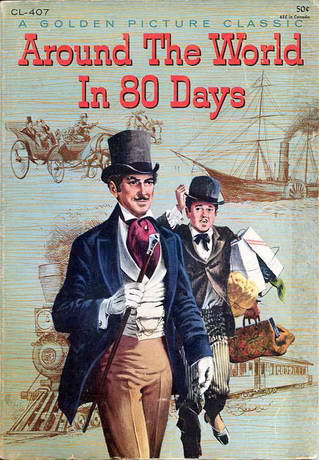
Around the World in Eighty Days - I always liked this one, I think because Phileas Fogg is just so unredoubtable (I think that’s the word).  He is indeed, but on rereading, I found this very aplomb to be somewhat out of place.  He insists that a trip round the world in 80 days is not merely a best case scenario, but eminently possible.  Though he does, in the end, succeed, in the face of many tribulations, his very narrow escapes at several points in his journey seem to indicate that no, indeed, plenty of luck is needed to make the deadline, it is by no means a foregone conclusion, even to one as fastidiously careful as PF.  So when Phileas Fogg’s infallibility fades somewhat, what’s left? It’s still a pretty good adventure :) Especially when so many of the places he visits were new to me as they were when I first read this book.  It was quite an education and an enjoyable journey, even this time around.

The Wonderful Wizard of Oz - I never liked this as much as the rest of the Oz books, and it is very different I think.  I haven’t read the rest so I can’t really compare, but what I can say of this one, is it’s written in that very deliberate fairy tale style.  The plot plods along, the characters state things, and it’s all just a little emotionless.  But when we’re talking about a story as iconic as this one, we bring our own emotion to the table, and this funny little fairy tale speaks to us (or me :))


Anne of Green Gables / Anne of Avonlea / etc.

Thus far I have only reread the first two of the series, and I’m not sure I will end up reviewing the rest if I go farther, so for now, let’s count this for all of them :) The Anne books were always a series I tolerated for the romance, which is of course excellent.  That’s why I’ve read Anne of the Island far more than the other ones.  The romance is of course present in the first two (I think the first even more than the second) but much more subtle/in the background of  course.  As for everything else, I always found Anne and her fancies to be annoying and the way everyone loves her to be extremely Mary-Sue-ish.  So it was much to my surprised that I found Anne Shirley when she first arrived at Green Gables, to be a delightful and sympathetic preteen.  Her high flown speeches and exaggerated emotions were quite as amusing to me as to Marilla and Matthew, and she seemed a sweet child deserving of love, much as she is to that pair.  Her various scrapes were of course a little trying but mostly less awful than I remembered.  I was, in short, pleasantly surprised, and attributed it to my being old enough to appreciate Anne for the child she was. This is probably true, Anne of Green Gables may be better read as as an adult for one to sympathize with its tone (at least in my case).  BUT I will say that as Anne aged - when she grew into a thoughtful and dreamy teenager, I felt my old skepticism return.  Teenage Anne’s quiet fantasies and deep engagement with nature and philosophy left me rather cold and I did not feel the same sense of love that her townspeople seem to feel for her.  Maybe that’s because I need to get yet more older to appreciate it :) Or maybe it’s because when she started to take herself seriously, I lost all interest.   Not that these books aren’t still very enjoyable in their romance and their light tales of PEI life (not to mention Anne’s various successes along the path of life) but I find my earlier impression to have been confirmed in the later parts of AoGG and AoA.  Oh well, can’t complain :)

Verdict: collective 4/5 can't be bothered to do each individually :)

Thursday, November 14, 2013

Classically Good

Lagging behind as usual... I think I promised you I'd have something more accomplished than GH to review soon, and indeed, soon after I wrote my last review I did complete my grand endeavor (ok, ok, not so grand) but then of course life interfered, in the form of an interrupted move.  And today I sit here in Teaneck, waiting for my house to be ready and starting my delayed review of... North and South.  I know, I know, not crazy impressive.  But it it a *little* more intellectual/challenging than GH :) Where do I start? Should it be with my personal history of N&S? Why not? :)

I read Wives and Daughters in high school some time, I liked it.  That was when I used to read lots of classics, some of them on the bleaker side (Bleak House :)), so W&D was almost a treat in its treatment of middle class society and young couples in love.  I didn't read any more of Elizabeth Gaskell's books at the time, I thought W&D was by far her most prominent (I guess it is that).  So much for that. Fast forward a few years, to the beginning of youtube fandom, when I watched a video entitled... well entitled something.  It was fun :) (I can't find it anymore, it was a montage of period heroes).  There were a few I didn't recognize, including one that was identified as Richard Armitage in North and South.  Richard Armitage? Waaaah?? Isn't he like an ambassador or something? Why yes he is... because there are two Richard Armitages :) The ambassador (we don't like him) and the actor - we HEART him.  He was one of my major celebrity crushes, I watched everything I could find with him online.  Anyways... jumping ahead of ourselves.  I looked him up and I looked North and South up.  I was intrigued, no doubt about it.  I made a deal with myself I wouldn't watch the movie till I read the book... so of course I lost no time in reading the book :) (I think I ordered it online).  I enjoyed the movie in its own time, but it's the book I'm here to talk about.

And I enjoyed that too.  The first time I read it, the second time, and now, the third time (I think it's the third time). It's a serious book, even the romance is intense, and the romance is only a small part of a story that's more about class tensions in the early Victorian era.  Sounds appealing, right? But the romance is *excellent*, excellent I say.  Good amount of pathos, nice amount of suspense, denouement not terribly anti-climatic.  (Well the romance aspect of it isn't, the rest is actually quite anti-climatic, I think her editor told her to end it already or something - jumping ahead of myself again).

But what's interesting is that, despite the comparative dearth of romance, I very much enjoyed the entire book.  Thornton and Margaret are both strong, and mostly very likeable (the very is more him and than her) and their story is interesting because it's about them.  I can't say I'm very interesting in the struggles of the industrial revolution but this book makes me care.  It even makes me think a little bit.  But mostly, it entertains :) That's quite a compliment for a book with a painting of something other than people on the cover :)

Bottom line, I liked this book.  It's obviously well-written, it's entertaining, it's romantic, and it's a good story.  Yay for books like this :)

Verdict: 5/5

Thursday, January 10, 2013

Not Quite As Much of a Romp As You Might Expect

When I finished Miss Marjoribanks, it was on with the search for kindle material.  I browsed the library's ebooks, but nothing good is ever available.  I noticed a book called "Brewster's Millions" which had a classics appearance to it (not a real cover :)) and the title itself sounded familiar.  Once I looked it up, I realized the title sounded familiar to me only because of the movie based on it (fairly loosely I think), but the book itself fell into the same kind of minor classic category as Miss M - although American, not British.  It seemed worth a go.

It was quite turn-of-the-century American, all lightness and fluff.  The premise of the book is Brewster spending a million dollars in a year - how will he do it? This was obviously much harder 100 years ago, and the various provisions for spending (having nothing to show it for it at the end, not giving it away) made it harder still.  But of course, the book would have had no plot at all if it was just about spending money.  There's a love story to go along with it of course - and then there's the tension of whether Brewster will succeed, that is, succeed in spending money in the correct way and succeed in spending it all.

None of the elements were particularly pleasing on their own, but put together, I guess they were something.  Brewster himself is likeable and we certainly sympathize with him on his ridiculous journey.  I knew the whole time the ending wasn't going to be simple though - what would be the point? So of course I was tense as he spent, knowing he wouldn't get it all back in the end (he needed to spend a million dollars to inherit seven million, sorry for not explaining that earlier :)) But in the end, it was resolved nicely enough, though I think slightly anti-climactically.  In any case, an amusing journey, which was short enough that it never really got boring.

Verdict: 3/5

Some Light Classical Fare

Well now I had my ereader, but what to read? Didn't want to pay for anything, prime lending library did not show much promise, library ebooks were mostly checked out, and did I have the patience to get into a classic (or other copyright-expired material :))? Lucky for me, I found one for which the answer was yes - Miss Marjoriebanks.  This is a book that I heard of who knows where, maybe on some recommendation for what to read after Jane Austen? it's a minor English classic that I never read because it wasn't in the library (and I didn't care that much).  Lo and behold, the *very day* (maybe it was the day before) I needed something to read on my kindle, it was published as an ebook on amazon! Yay!

It proved surprisingly easy reading, actually.  It's the kind of thing that it's only a classic because it's still around - when it was originally published, I doubt it had any literary pretensions.  Which of course usually makes for a fairly light read.  It was a charmer in its own way, which is of course a way I am very familiar with - 19th century gentle England.   A little more middle class than my usual (townspeople, not (as they term it) "county", but they certainly acknowledge their own pretensions to gentility.  I guess it's much the same folk as Elizabeth Gaskell (the two I've read anyway, N&S and W&D), though possibly a little later in time.  In any case, quite my milieu.

Miss Marjoriebanks herself is quite a character, one of those indefatigable types who will always carry everything her way in the end (a'la The Grand Sophy).  I always like reading about cool people like that.  And I was fairly certain that there would be little or no romance from almost the beginning (just didn't see any likely candidates) so I didn't mind that none materialized.   Don't get me wrong, she does get paired off in the end, but that's not what the book is about...

... or is it? It's not, but then, what is the book about? Miss M. goes through machinations of various sorts to arrange various things to her satisfaction, some of which are more successful than others.  But in the end of the day, does it make much difference? The denouement of the book is precipitated by an event that renders all past history moot.  Well maybe that's the point of the book, all the machinations lead us right back to where we started (slight spoiler :)) but it does seem a bit of a letdown after all the glorious schemes.  Still the journey was entertaining enough, and Miss M. gets her happy ending, so I'm not overly inclined to complain.  Definitely a point in its favor that it kept me so well entertained, even in ereader form.

Verdict: 4/5

Wednesday, July 4, 2012

All the Adventure, As Promised


Oy veis mir.  Two behind and it's not even June anymore.  That's what comes of not writing these on the bus... but what's the point of lamentation? Let's get on with it.  Luckily, though I finished this like what 3 weeks ago, it's still relatively fresh in my mind... since this was like the 10th time (or something like that) I read it.  After the success of The Blue Castle, and before any of my new books came in at the library, I was eager to continue with the old favorites trend.  So I picked up a certified goodie, The Scarlet Pimpernel.  I'm obviously not alone in my enjoyment of this one - this book is a classic, and it's not because of any great literary value.  It really is the quintessential adventure.

I first valued TSP as a romance, because that's what I value everything as.  And of course, Sir Percy's hidden passion for Marguerite is very romantic.  But what makes this book stand out as a romance is the same thing that makes it stand out in general - the very awesome Scarlet Pimpernel.  I mean, I guess he's not the man nearest and dearest to everyone's heart, but handsome, brave, smart as a whip, quick, gallant (and of course rich ;))... yes, he's pretty much all that.  So who wouldn't want to read a romance starring him and a woman who is impressive enough in her own right?   And romance is very satisfying, as far as it goes.  But the truth is, it's not given *much* attention during the course of the book.

It's much more about the story, as it should be.  I've read this book a lot, I know the drill, and yet I still find it to be a page turner.  It's well-paced, with things moving along, and no gratuitous action scenes thrown in.  We get closer and closer to the mysterious identity of the SP, and then, when we find it, we are treated to a brilliant display of the abilities that have kept him bringing people to safety by the skin of his teeth time and time again.  I remember one time I felt compelled to actually clap at the conclusion of one his triumphs.  This time I didn't go so far, but trust me, I was impressed.  I don't know that there's much funner reading than Sir Percy's pitting of his wits against his enemies'.

To be sure, the book is guilty in some measure (no little one I might even say) of aggrandizing the situation for dramatic tone.   Every moment is milked for all its worth, every dilemma is agonizing, all the emotions are exquisite.  Not to mention the slightly strange emphasis at times on Marguerite's girlishness and how attractive it seems to make her (sorry not really the same thing, but it all comes down to that old "show, don't tell")  And I was even more aggravate than usual from having made the mistake of reading the forward and hearing how Baroness Orczy apparently felt "the beautiful Lady Blakeney" to be her alternate ego, her better self - don't read forwards, especially not if you plan on writing your own review.  BUT... this is one book that can get away with pretty much whatever it wants.  It really does live up to the promise of all that drama, manufactured or not.  So with all the angst and all the throes of passion, it keeps on zipping along towards its extremely satisfying conclusion.  There's a reason so many people love this book.

Verdict: 5/5

Friday, June 1, 2012

Simple Goodness

As you may imagine, it was with some relief I turned towards a tried-and-true favorite after last book's disappointment.  The Blue Castle certainly ranks as one of my two favorite LM Montgomerys.  Now that might now be particularly high praise, since I'm not a major fan of every one of her books by any means, but in this case, I'm pretty sure TBC is one of the books I mention as a favorite of mine in this very blogger profile, and of course, was one of the first books I ever bought (well in recent years, not counting gordon korman and harry potter).  Anyway, the book has been a delight since the first time I read it (not sure how many years ago, sometime in middle school probably) and it was just the ticket for an easy, breezy, guaranteed to delight romance.

Henny G. once complained about this book that its ending is just too ridiculously felicitous.  Not only do the lovers end up happily ever after (of course) but the mysterious hero ends up being the son of a fabulously wealthy man... AND the secret author of the heroine's favorite books.  Now I agree that all that wasn't strictly necessary, but I don't find it at all irritating.  The latter detail isn't emphasized at all, and Barney's secret wealth ensures their happily-ever-after just a little more.  So let's dismiss that first complaint :) Any others? Well it's short... not that that's necessarily a bad thing, and certainly makes for an easy read, but I guess it's somewhat lacking in substance.  I noticed for the first time that the bulk of the couple's interaction is compressed into maybe the last third of the book, if even that - it make sense, because more would have necessitated an introduction of obstacles/issues/problems whatnot in the way of our happy couple's idyll, and we wouldn't want that.  But it's funny to see that the first 2/3 of the book are about 2 months all told, and then the rest of a year takes half that length.  Again, didn't find it irritating.  Was there anything I did find to be? If there was something not realistic about this book, it's Valancy's horrible life prior to her newfound determination to live life as she pleases - specifically, what a nightmare of a family! Yes, it makes for good, funny, reading, but really, Valancy's mother doesn't even seem to love her.  And that's just not realistic in my book.  But like I said, it makes for good reading, and doesn't bother me *all* that much.

Leaving me free to revel in the extremely well executed love-story-with-coming-of-age of overtones that remains.  LM Montogomery isn't shy about giving her characters all sorts of gifts.  Valancy isn't as loved as Anne, but she is appreciated by those who matter (those who matter being those who appreciate her of course :)) And once she shrugs off the burden of her unloveable family, things proceed pretty much smoothly.  She likes caring for Celia, she loves her life with Barney... along with her, we are just living out the year, content in the simple things in life.  So no tension, and, with that, good romance.  Lots of interaction, a pretty decent hero (rough on the outside, tender within kind of guy), and some good heart-squeezing moments (do you know what I mean? when I read these good romances and I come to a passage I like, I feel like my heart actually squeezes some times).  And of course, an excellent ending (caveats above).  What more could I ask for? Not much, which is why this one will probably always remain a favorite of mine.

Verdict: 5/5

Friday, May 11, 2012

Why JA Is Where It's At

I have been sadly remiss in posting - it's been over a week since I finished my latest, but I haven't felt like posting on the bus (with good reason, I'm sitting here posting in stop-and-go traffic and ugh it does not make me feel good) and these days, that's my goto posting time.  But at least I haven't finished another book in that time, since last Shabbos was busy (CL! :)) and I haven't felt like reading on the bus either.  But, you know, it's almost Shabbos again, and this time I might end up finishing something... so better get on with this one.  This one is Northanger Abbey, next in line of books I own that I felt like re-reading.  It was a very different experience than rereading P&P, since I know it so much less well.  I think this must be maybe my fifth time reading it, and the first since 12th grade, the ITV movie, and my general immersion in all things Austen via the blogs.

I definitely had some anticipation going in - I never haven't enjoyed NA, and Henry Tilney's popularity among some (the Austenblog Editrix) made me eager to get to know him, at least, again.  And JJ Field in the move is adorable of course :) But I must say, whatever my expectations, they were surpassed! I finished the book in a few days, mostly on the book, and I never wanted to put it down (yes, I was often heading into work :)) NA is probably JA's least serious work, written as a satire on horrid novels, and that lightness of tone never really abates.  JA's wit reigns supreme, and I am reminded, or reassured, of her amazing ability to write in such a well-formed, yet such a far from ponderous, and ever humorous vent.

As for characters - Catherine herself is likable, if stupid.  And she is quite stupid, at least where human nature is concerned.  I was surprised to find that her predilection for seeing the world through the eyes of Mrs. Radcliffe and co. was less pronounced than I had thought - she only really lets her imagination overcome her at Northanger.  Most of the satire comes from JA's interjections that "a heroine must this" or "as was appropriate, he reacted thus" contrary to the usual course of events followed here.  But anyway, her naivete when it comes to Isabelle is really on the annoying side, since, at least until the end, I feel like Isabelle's false professions and airs never result in consequences unpleasant to herself.  But I suppose in the end, Catherine sees even Isabelle for what she is, and her appreciation of John Thorpe comes rather earlier.

Then there's Henry Tilney. !!!!!!! The perfect combination of flirtatiousness, kindness, humor, and wisdom.  He seems, at least to me, quite a modern type of hero, one whose charm lies in his manner, rather than his character (though his character is very good, don't worry :)) I mean, I could easily see GH creating such a man (like Mr. Beaumaris, though he's definitely more jaded) but I feel like JA must have been the first to have put such charm to the page (ok, maybe she wasn't, but I never read anything like it dated anywhere near that time).  I can see why he such a fave among the ladies ;)

So the humor is great, the story flows easily, the characters are just as they should be... what about the romance? So here's the thing - I think last time (or maybe it was the time before?) I was disappointed by the romance, since it's really not much of one at all (in the tension/angst sense I mean of course :)).  But knowing that going in, I didn't care all that much this time.  I thought maybe there would be some bits I missed that I could pick up on and enjoy... and maybe there were.... kind of.  But in general, it basically says straight out that Henry falls in love with Catherine because she's in love with him.  A very un-GH-like behavior, but in keeping with the theme of anti-horrid novels.  And it really didn't affect my liking of the book at all.  It was just so perfect the way it was, light satire and a good story too.

Verdict: 5/5

Saturday, September 25, 2010

A Little Bit of This, A Little Bit of That... And Ta da!

I've got a lot to catch up on! Three days of yom tov with no Internet access and nothing to do but read... well I actually finished four books, which I guess isn't a ton, but I'm not sure if they're all getting full treatment - I'm taking them one at a time.  Let's start with #1 - #1 because it's the first one I finished, but easily #1 of the bunch in any case.  That's Sanditon, which is slightly by Jane Austen, mostly by Another Lady (Anne Telscombe is her name, I think).  The story with this one is that Jane Austen wrote the first 11 chapters of the book right before she died.  There are a few versions finishing it, but I think this is the original.  I never had much of an interest in reading it - I think I thought Sanditon was kind of like Cranford, a village tale with not much romance for some reason - but I read a review of a few of the different ones on one of the Austen websites and decided to read this one (well I wanted to read others too, but this was the one I found first - and lucky for that :)) I read it in December (actually got it out the last day of school :)) and I LOVED it - so much that I immediately bought a copy (yes, this was after I started getting into buying books, and the main reason I bought this one was because the only library that had a copy was Prince Georges but still... I really liked it).  Anyway, that was in December.  For some reason, I picked it up earlier this week and decided to reread it.

So right away, I found myself caught up in it again.  I was kind of hyper aware the first 11 chapters of it being Jane Austen's writing and trying to compare it with her other books, but the truth is, I think it's a lot less polished than any of the others because it was a first draft.  So it's not Jane Austen's writing even in the beginning, and certainly not after that, but Jane Austen isn't the only decent writer around :) What I mean to say is, Jane Austen's writing is perfectly crafted, exquisitely witty, full of subtle meaning... but light and easy writing sounding straight out of my comfort zone is fun to read even if it doesn't quite meet all those criteria.  Whatever, the writing was 100% enjoyable, I would say totally unobtrusive, completely quiet and completely unboring.  So I could concentrate on the story... and on the romance of course.  Now the romance was definitely a good one - Sydney's a great guy, personable, smart, very eligible, nice and loyal, he loves Charlotte the whole time, there's a fair amount of doubt on both sides so they don't get together too soon... but the truth is, a lot of the romance is not at all overt.  I mean, we know Sydney loves her, but the book doesn't give much hint of that.  And there's a whole lot of attention given to the main plot (can't even say subplot) involving Sydney's friend Henry Brudenall and lovely girl Clara Brereton.  And of course I have no interest in that romance, none at all :)

So why did I like this book so much? Like I said, the writing style is *just* up my alley, but why is that enough? There's also the setting, which I suppose would be even more up my alley if they were *just* a degree higher socially (why not go for nobility? :)) but English Regency gentility's good enough for me. Of course there's the all important every character is likeable and there's like *no* tension (not even when Charlotte (main girl - don't believe I've mentioned that yet :)) is kidnapped by Sir Edward... I guess it's just a combination of all factors.  It's funny, because I enjoyed it when I was reading it, but only after I finished was I like, wow this is a great book.  And I think it was like that last time too.  I think all those factors combine to make a product so satisfactory that that's my reaction.... So writers, if you're looking for the blue-ribbon recipe in writing books Rochel likes... you can do no better than this book's combo :)

Verdict: 5/5
Food: thought of a perfect one while I was writing that recipe part - chocolate chip cookie dough ice cream - I mean, talk about perfect combo :)

P.S. on a slightly more literary note, I was thinking that this book might have been meant as a reworking of Northanger Abbey - it has some similarity in an older/wiser hero with a sense of humor, a heroine away from her country home at a watering place... with the significant difference that this heroine is as practical as Catherine is flightly... I wonder if there are critics out there who agree with me? You never know :)

Monday, August 23, 2010

P.S. Sequel Not Worth Reading

I loved Daddy-Long-Legs so much, I just couldn't let it go - so when I looked up Dear Enemy on wikipedia and found that it was on Project Gutenberg, I sat down and read it through (here's the link, if you're interested).  I didn't remember it at being terribly good, and it wasn't terrible good.  It  was mildly romantic, definitely, but that wasn't really the central point of the book, which was much more about Sallie caring for the orphanage and growing up (this is the sequel to DLL, btw about Judy's friend Sallie caring for Judy's orphanage).  But anyway, it was mostly pretty boring, though the writing reminded of DLL (of course), which made it pretty readable.  And I milked the romance for what it was worth, which wasn't much, like I said.  But the most disappointing thing was that there wasn't really much Judy and Jervis news.  I mean of course they are completely happy, and have a baby (a girl :)) but since Sallie is mostly writing to Judy the whole time, there's not any interaction between J&J.  And not really any little tidbits either... nothing that makes the book worth reading as a sequel.  Oh and one of the best things about DLL is of course that Judy is writing the letters 1) almost as a diary and 2) to Jervis, neither of which is true here and which takes away most of the potential for romance... oh well :)

Verdict: 2.5/5 (only out of my fondness for the characters :))
Food: attractive by association, but not in actuality... can we say turkey? it looks like chicken, but it's just not chicken (I refer here to roast turkey, I happen to quite like turkey pastrami :))

Sunday, August 22, 2010

A Pleasure From Start to Finish (Lucky Me! :))

Not that I didn't know this before, but I LOVE DADDY-LONG-LEGS! I just finished reading it for the I-don't-know-what time (but well enough that I occasionally quote from it, so we're talking the teens here for sure) and it is *INCREDIBLY* romantic.  First of all, the story is obviously fantastic - totally classic, handsome prince fairy tale - I was thinking as  I finished it what a total fairy tale this book is - more on that later.  Then of course, I love the characters - well chiefly, Judy is very cute and likeable.  Great things always happen to her (like Anne in that way) but besides that she's always happy and I love that in a person.  It makes the book totally stress free.  Well not that it would have any stress at all, but when Judy stays upbeat, so does the book's tone.  So that's another thing to like - absolutely no tension.

Now normally I hate the epistolary style (I have more than once not read a book because it's written in letters) but this one is done so well it doesn't matter.   First of all, I love the writing - the whole time I was reading I was thinking that I really model my blog style after it to some extent - and then I realized why.  Because it's entirely conversational - the whole book is just Judy talking on and on about her life, thoughts, experiences, whatever - kind of rambling where her mind takes her - just like my blog :)  And even though that kind of thing is not guaranteed to be good reading, like I said, it's done really well.   And then there's the other objection to letter writing novels and that is *nothing from the guy's POV*! Which I must admit would be a huge objection in almost any other book, but here I guess there are two saving graces. 1) I know the book so well I can pretty much make up the other side 2) (this is actually the third saving grace I just thought of) Judy writes the letters to another man, not to the guy so that we get a lot more of her feelings and especially an entirely ingenuous account of Master Jervie - which connects back to point #1, which is that is it *tons* of fun to imagine Master Jervie's perspective when reading the letters and 3) she (Jean Webster) manages to put in romantic moments even within this format.  Chiefly, the ever increasing Christmas gifts the more he falls in love with her (silly grin here :)) But also how he visits Julia just to see her, how he invites her to NY to see Hamlet after she reads it (just picked up on that this time actually).  And then there's the *fantastic angst* (how horrible am I that I describe it that way) every time she mentions Jimmy McBride (actually that's more #2 - we get that extra perpective b/c she's writing to someone else) Okay, whatever this book is AMAZING!!!

Oh and back to the fairy tale thing - so I'm not sure if I've ever mentioned it before, but part of what makes a fairy tale in my book is that there's no internal growth for the main character - she's kind of perfect and just waiting for her prince.  Judy doesn't really have any big faults or anything huge missing in her life.  She just wants some family - preferably in the form of a wise and handsome rich man to whisk her away from all cares and go gallivanting about with her ;)  And that's just great, because I'd rather read about all Judy's fun college life and not worry about anything marring that beautiful romance.

Verdict: Do you even have to ask? :)  5/5
Food: well pick a food, any food... pizza, macaroni and cheese, hamburgers with mayo, peanut butter, ice cream... I'll just go with pizza (only because haagen dasz is being reserved for another very special book in my reading pile :))

Monday, August 16, 2010

A Romance on the Surface

This latest is an old favorite of mine - Rosamond Pilcher's Snow in April.  I originally got it out of the Bais Yaakov library of all places, where I read it while waiting for a ride home on a snow day.  I thoroughly enjoyed it at the time and had read it at least twice since then before taking it with me on my trip.  I actually didn't read it down under, but Peryl and Shifra did (actually, Shifra read it on the plane back) and reported back to me.  Both of them said that the ending was rather abrupt, which I recalled was the case, both of them enjoyed the book/writing, as I did, but both of them said the entire story felt rather unfilled, which I hadn't particularly noticed in my previous readings.

When Peryl described the characters as somewhat under realized, I defended the book as a typical English/Scottish one of certain type, where the author's restrained/refined sensibilities come in to play to make the characters seem a little bit dull at times - it's not that they are actually so... unhuman... but that the proper English stiff upper lip of both the writing and the characters themselves makes them seem so.  Shifra said something similar in that she didn't think the romance was at all plausible - they seemed to fall in love out of nowhere, with no build up and no warning - this indeed would be a scathing indictment of any chic lit or other book with pretensions to romance (this one certainly isn't a chic lit in the traditional sense, since it comes about 30 years too early for that, but I think that's the spirit of it). 

Anyway, so after all those criticisms, I went in with a jaundiced eye and a bloodhound scent toward catching that supposedly missing buildup.  So here's what I found.  The angst is definitely there - well maybe it's not quite angst though... Actually angst is altogether the wrong word here.  (I mean there's a teeny bit - a *really* teeny bit of angst when Oliver (main guy) finds out that Caroline (main girl) is engaged but it's kind of not there at all and also when he finds out she's sick but it's all so understated it doesn't really rate).  What I should have said is that Caroline exhibits a touching vulnerability in her lack of appetite, fragile appearance, and general inability to take care of herself.  I think I found this more attractive when I was younger - I mean, I don't mind it now, but I don't think it particularly adds to the romance (signs I am growing up, oh my goodness :))

As for the romance developing itself, there's actually plenty there from Caroline's point of view.  She had a bad experience and so decided to forgo romance for security and got engaged to her stepmother's brother.  When she met Oliver, she realized she could have security AND romance - so nothing implausible or rushed about that, I'd fall for him too ;)  But what about Oliver's side? I mean there's definitely the contrast with Liz to make him realize how much he values Caroline's gentleness and sweet character, but the truth is from everything I can see, he really falls for her because he takes such care of her.  And I must say, what kind of romance is that? Simply *not* one - or very little of one in any case.  So that's kind of disappointing... but the truth is, all that is only realized upon a pretty analytical reading - I mean if you just read it the way I usually do, which is with the expectation that this is a pretty little romance, then sure, it comes out as a little rushed and kind of missing a few crucial plot developments, but it's definitely a romance.  And, as the characters are still likeable, there's *no* tension whatsoever, and the writing is much above the general run of chic lits (again, not a chic lit here) it's a good one.  One I will be reading yet again in the future, I'm sure :)

Verdict: 4/5
Food: oldie but goodie that's maybe not quite as good as it used to be... cinnamon toast crunch - I LOVE it, but I don't think it's one of my absolute favorite cereals anymore (that would be golden grahams, toasted oatmeal flakes, honey bunches of oats if you're wondering :))